“Fusion is no longer a thirty-year question — it’s now a business race”: Interview with Georgy Subbotin, CTO
Recent advances in superconducting magnets, plasma-facing materials, computational modeling, and artificial intelligence (AI) have created new opportunities for fusion development, spurring private investment in commercial reactor projects. The new challenge is making fusion commercially viable. Georgy Subbotin, former ITER design integrator and now CTO of Next Step Fusion, explains how his company’s conventional and AI-enabled solutions are helping tokamak developers accelerate their path to commercial fusion power.
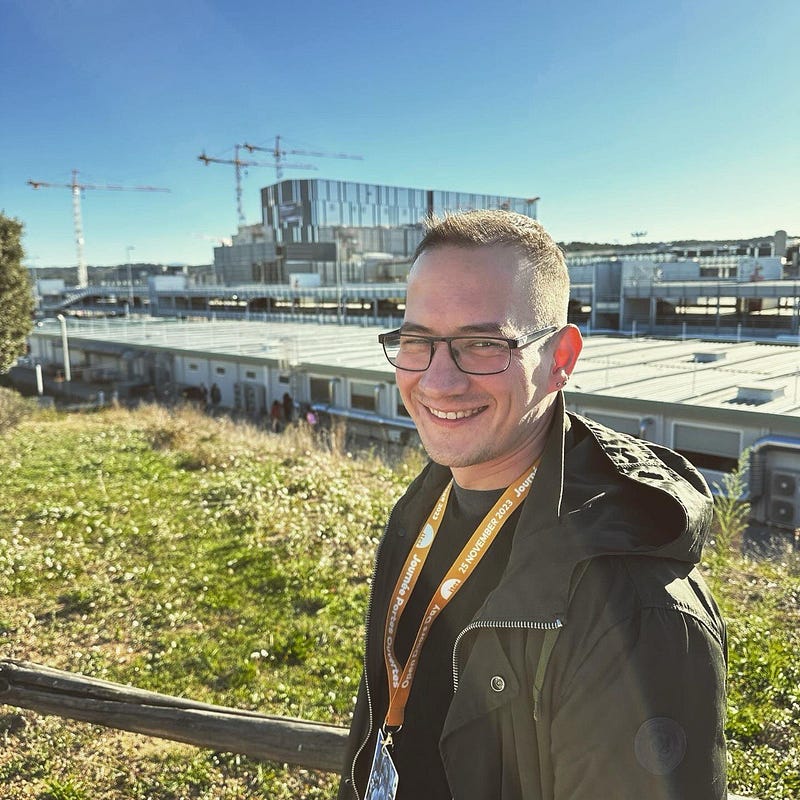
— Georgy, you worked on the ITER project — the largest international fusion project. What brought you to a private company?
— Career development within ITER involves a very gradual and lengthy path. Due to the scale of government projects, time horizons are measured in decades. I wanted to be in a more dynamic environment because I understood that fusion is experiencing a critical transition from scientific research to full-fledged business.
Today’s situation resembles the turning point in aviation after the Wright brothers’ first flight. Everyone realized that flying was possible, and a technology race began. The same thing is happening with fusion now — only the stakes are much higher.
— What has changed in fusion in recent years?
— When Commonwealth Fusion Systems raised $1.8 billion in 2021, a revolution happened — they essentially convinced investors to put unprecedented money into the field. With total funding now exceeding $2 billion and partnership with Google, this represents a dramatic shift from the previous reality where no one had invested more than $100–200 million in fusion over several rounds.
Many new fusion startups have appeared on the market, aiming to exploit nearly all known fusion concepts and to invent new ones. The US, EU, and China are pouring significant public and private funding into the so-called “fusion race.”
— It seems the investment boom is outpacing technological readiness? After all, skeptics point out that even record achievements like 22-minute plasma confinement are still insufficient for a commercial reactor. How do you respond to this?
— Actually, the current boom reflects a growing recognition that, from a scientific standpoint, we now understand all the essential physics of tokamaks. If you think about it, every requirement for achieving fusion has already been demonstrated — albeit separately — across different experimental facilities. This means that fusion has increasingly become an engineering challenge rather than a scientific one. While there are still many engineering problems to solve, progress in this area is now much faster than in the earlier days of fundamental research.
Commercial fusion depends on achieving three key parameters, known collectively as the “triple product”: temperature, density, and confinement time. Experiments on machines like JET and other record-setters have brought us to the brink of practical fusion. Now, tokamaks such as SPARC and BEST aim to demonstrate the viability of commercial fusion.
That’s precisely why Commonwealth Fusion Systems (CFS) was able to raise over a billion dollars. They effectively performed a comprehensive review of all existing knowledge on building and operating fusion devices. By consolidating best practices, discarding ineffective approaches, and designing a machine focused on high energy output and real-world operational experience, they’ve positioned themselves to lead the transition toward commercially viable fusion. If they succeed, it could open the door to the first generation of fusion power plants.
— If everything is technologically ready, why haven’t government projects like ITER achieved results yet? What’s the fundamental difference between government and private approaches?
— It’s really about the speed of decision-making and tolerance for risk. The ITER project is led by a consortium of governments, which prioritizes consensus and inherently favors low-risk approaches. On top of that, ITER represents an enormous leap beyond any previous device, requiring massive infrastructure, extensive R&D, and parallel side projects designed to validate its assumptions before the main reactor even turns on.
In contrast, the private sector has both the capacity and flexibility to take risks and move quickly. A private company can raise capital, build a facility, test it, and — if something doesn’t work — rapidly pivot and adjust the approach. ITER, having been under construction for the past 20 years, doesn’t have that luxury.
Even if Commonwealth Fusion Systems (CFS) doesn’t hit peak performance on their first attempt, they will still produce and test a wide range of reactor-relevant technologies. Since they’ve already established full production lines, they can move swiftly into a second iteration to push toward commercial results — driven by rapid prototyping and a willingness to fail fast and improve. CFS aims to demonstrate its SPARC reactor by 2030. For that reason, I can say with near certainty that fusion in the private sector will succeed before government-led projects.
Precise simulations and AI instead of big in-house team of physicists and engineers
— Why did your company focus specifically on tokamaks?
— I’m a supporter of Occam’s razor — the most effective solution is usually the most elegant one. Tokamaks, compared to other approaches, are the most straightforward from an engineering perspective. They have relatively simple engineering of magnetic system and well-studied physics processes. But most importantly, tokamaks have the richest experimental database.
Throughout history, nearly 200 tokamaks have been built, while there are only dozens of stellarators or inertial confinement facilities. This means we understand their behavior better, can predict results more accurately, and solve emerging problems faster. From a commercialization standpoint, tokamaks are closest to a market solution. When you have 200 precedents instead of 20, investor risks are dramatically reduced.
— If tokamaks are such a proven technology, why is it still difficult to build a commercial reactor? What are the main development challenges?
— The paradox is that understanding physics and creating a specific design are different tasks. Even knowing how a tokamak works in principle, it’s very difficult to calculate all the physics for a specific device. And in tokamaks, engineering and physics constantly influence each other — you can’t first design the “hardware” and then adjust the plasma to it.
Aleksei Zolotarev (founder of Next Step Fusion) and I encountered this from our own experience. When we wanted to build a small experimental tokamak, we discovered that there’s no team in the world that can develop a complete design within reasonable time and budget. Everything is too expensive and slow, or they only handle separate pieces of the project.
Therefore, modern fusion companies are often compelled to maintain a full stack of in-house specialists — both physicists and engineers. However, this is very expensive, as not all of these experts are needed throughout the entire lifecycle of a commercial fusion company.
— How do you solve this problem?
We’ve assembled a very experienced team and developed an integrated modeling framework — a seamless combination of in-house and third-party tools — that enables fast and reliable workflows for tokamak design, simulations, scenario development, and other critical tasks.
At the core of this framework is a simulator equipped with optimization algorithms capable of reducing what would typically be months of manual calculations. A client can bring in a tokamak concept at its earliest stage — essentially just a parameter sketch — and receive a rapid feasibility analysis conducted by a professional team, saving valuable time and significantly shortening the design iteration cycle.
Our initial project in this area was the conceptual design of our own compact negative triangularity tokamak, developed in collaboration with researchers from Columbia University. Following that, we refined and expanded the tools to make them applicable to commercial projects.
So far, we’ve successfully validated this approach and toolset with several commercial clients who are building tokamaks for entirely different applications. Looking ahead, we see tremendous potential to further enhance the framework by expanding its simulation capabilities and boosting performance through machine learning.
— Have you already tested machine learning (ML) tools on real fusion problems?
— Absolutely — we have concrete results. The first is an experiment on the DIII-D tokamak, which we carried out in collaboration with the UC San Diego Center for Energy Research. We tested a control approach that addresses a critical challenge for future reactors: controlling plasma shape and position from the very first shot, without relying on prior operational data.
Plasma in a tokamak exists in a fundamentally unstable state — without continuous active control, it either extinguishes instantly or comes into contact with the walls, risking damage to the reactor. This makes it one of the most complex control problems in modern engineering.
Tuning classical control systems is extremely challenging because dozens of interdependent physical processes occur simultaneously within the plasma. Temperature affects density; both influence current distribution and magnetic fields; and the magnetic fields, in turn, affect plasma shape — and vice versa. All of this evolves on the timescale of milliseconds.
When operating such a complex system — where heating, magnetic fields, and gas injection must all be controlled simultaneously — manual or conventional algorithm tuning quickly hits its limits. That’s exactly where machine learning offers a powerful advantage.
— How does machine learning solve this problem?
— We applied Reinforcement Learning (RL), a branch of machine learning in which an algorithm learns to make decisions through direct interaction with a simulator or environment. In our case, we conduct thousands of virtual experiments where the algorithm explores various control strategies and receives evaluative feedback based on the outcomes.
For each control action — such as modifying heating power or adjusting magnetic field parameters — the system receives a reward or penalty, depending on its effectiveness in maintaining plasma stability. This reward-driven feedback loop enables the algorithm to iteratively refine its strategy.
The principal advantage of RL lies in its ability to discover non-obvious control strategies that would be unlikely or infeasible for a human operator to design manually. It can generate sophisticated combinations of control actions, leveraging multiple actuators simultaneously to optimize system performance under dynamic and unstable plasma conditions.
We developed such a solution using our own stack of simulation technologies and tested it on the DIII-D tokamak, but this is just the beginning of a big journey to build the whole new integrated control system based on a combination of conventional and RL technologies. Our target is future commercial power plants.
— What technical problems will arise during the transition to commercial reactors?
— In experimental reactors, it’s possible to approach the machine and install sensitive diagnostic equipment close to the plasma. But commercial fusion reactors will operate in far more extreme conditions — intense neutron fluxes and wall temperatures reaching 400–500°C. This harsh environment will severely limit the placement and durability of sensors, often forcing diagnostics to be positioned meters — or even tens of meters — away, observing the plasma through narrow viewing channels and mirror systems.
As a result, data quality will degrade significantly, and we’ll know far less about the plasma’s real-time behavior. That creates a major challenge: controlling a much more powerful and unstable plasma with minimal and indirect data.
Model-based algorithms, enhanced by machine learning, offer a critical solution. These methods can infer key plasma dynamics using “implicit” parameters — signals and correlations that aren’t directly measured but are learned through interaction with high-fidelity models and simulations. In this way, the algorithm can effectively “see” into the plasma despite limited sensor input.
A key strength of our approach is platform independence. Because it’s not hardwired to a specific machine, it can be adapted to various devices — a vital capability, given the diversity of tokamaks under development.
Importantly, we don’t rely solely on machine learning. Reactor control will combine conventional, well-established control methods with ML-assisted techniques. Classical approaches bring decades of proven performance, while machine learning offers adaptability and deeper insight in conditions where traditional methods fall short.
“The next decade will be decisive”: forecasts and plans of Next Step Fusion
— When will we see the first commercial fusion power plants?
— We’re on the verge of a revolution. For the first time in history, all the key technologies required to build a commercial fusion reactor are coming together — superconducting magnets, AI-assisted control systems, and materials capable of withstanding the extreme fusion environment.
The next decade will be decisive. A global race is underway to build the first demonstration power plants, and the winners will likely emerge by the early 2030s. Our mission is to equip fusion companies with the tools they need to accelerate development and reduce risk.
What once took decades of physical experimentation can now be validated in just months using high-precision simulations. We’re compressing development cycles and transforming fusion energy from a scientific challenge into an engineering task. Artificial intelligence is also fundamentally reshaping the pace of innovation — unlocking faster design iterations, better predictions, and smarter control strategies.
The companies that first master these enabling technologies will secure a major competitive advantage in the clean energy market — a market valued in the trillions of dollars and forming right now.
— What are your forecasts for the coming years?
Over the next few years, the investment market will be holding its breath, closely watching CFS, BEST, Proxima, and other major players. While more fusion-oriented companies will emerge, they won’t all focus on achieving the fusion reaction itself. Instead, we’ll see the rise of supply chain companies and developers targeting niche applications.
Some companies will specialize in specific use cases — fusion for maritime vessels, isotopes production, small cities, or industrial heating. In my view, the current “zoo” of experimental approaches will gradually narrow, as more companies concentrate on core technologies such as tokamaks and stellarators.
— What are your long-term goals?
— We want to establish ourselves as part of the global energy sector, a market with an annual turnover of around $7 trillion. Even capturing a small fraction of that is already highly profitable.
We see our role as closing the gap between a reactor concept and its actual construction and operation. Performing qualified calculations of physical parameters and running high-fidelity simulations is an incredibly complex task, typically requiring a large team with specialized expertise. We provide these capabilities as a service, enabling tokamak builders to focus on other parts of their business.