Designing a Vacuum Vessel for a Negative Triangularity Tokamak
The vacuum vessel is one of the main components of a tokamak. It serves as the primary boundary for maintaining the high-vacuum environment required for plasma creation and as the first tritium barrier. For a negative triangularity tokamak, the design of the vacuum vessel presents a unique challenge because of its unconventional shape and the associated magnetic configurations which may be highly unstable and prone to disruptions. During plasma disruptions, the tokamak’s vacuum vessel suffers from high thermo-mechanical loads. Therefore, it should be designed with special attention. However, a vacuum vessel can also stabilize plasma, as it is usually made of conductive material, and should therefore be included in the design procedure.
This article explores the design considerations, challenges, and lessons learned during the development of such a vessel for our Negative Triangularity Tokamak.
Design Philosophy and Initial Considerations
The design process began with general engineering principles, focusing on integrating the vacuum vessel into the existing magnetic system. The shape of the vacuum vessel was dictated by the placement of poloidal field coils (PFCs), which are responsible for generating the desired magnetic configurations. These coil positions were established during the conceptual design phase [1] based on requirements for the plasma shape (major radius R, minor radius a, triangularity 𝞭, elongation 𝜿) and plasma current Ipl. As a result, the ambition for Ipl = 1 MA and high-value negative triangularity left limited flexibility for the vacuum vessel geometry.
In addition to the already finalized PFCs design, we had two high-level requirements that significantly affected our further design considerations:
- Maximizing available space: This would allow the easier integration of in-vessel components, such as plasma diagnostics, first wall, divertor structures, and passive stabilization coils.
- Simplifying fabrication: Using straightforward geometries would reduce manufacturing complexity and cost.
After researching the possible options, we settled on two that met all our requirements:
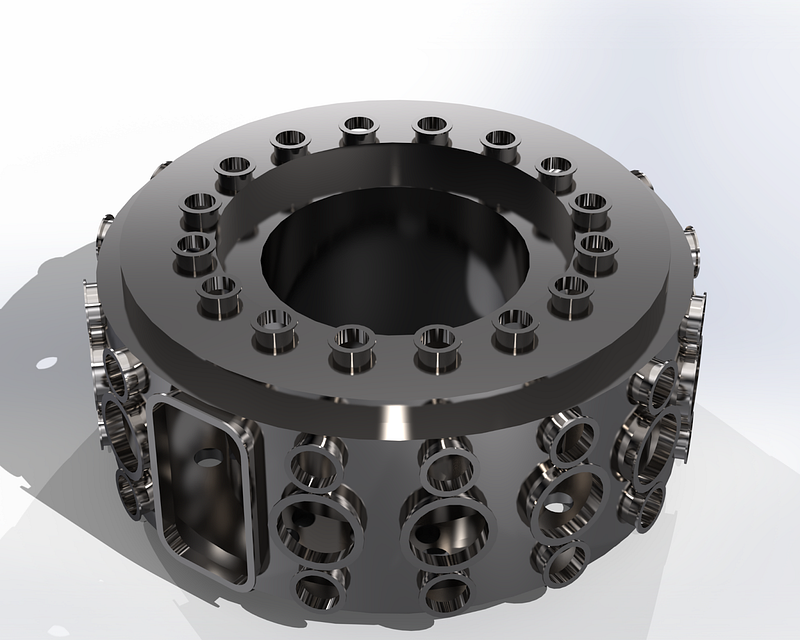
- Rectangular vessel (see fig.1): This design closely follows the contours of the poloidal magnetic system. It provided more internal space between the PFCs and simplified the installation of in-vessel components.
- Cone-shaped vessel: This alternative brought the conducting wall closer to the plasma, potentially enhancing vertical stability through passive stabilization, though reducing the available space for in-vessel components.
Challenges in Plasma Vertical Stability
To determine which vacuum vessel design best met the design requirements, digital replicas of each option were created. Each digital replica was simulated in NSFSim, a powerful tool for modeling plasma behavior under various operating conditions [2, 3]. NSFsim allows for plasma scenario calculations and the modeling of Vertical Displacement Events (VDEs) and subsequent disruptions. VDEs pose a significant challenge for tokamaks, particularly in systems with negative triangularity, where the natural plasma stability limits differ from those of traditional configurations. Preventing disruptions is critical to ensure safe operation of the device.
During these simulations (results are shown in figure 2), it became clear that the cone-shaped design gives the control system 1.5 times more time to react and avoid VDEs under the same conditions (same active/passive coils, identical plasma configuration). However, neither design option provided sufficient vertical stability for the plasma without additional stabilization measures. This highlights the need for an efficient stabilization system that balances passive and active components. For example, passive stabilization with high 𝛕wall provides the active stabilization system with more time to react to instabilities. At the same time it might slow down the penetration of the stabilizing field generated by the active stabilization system.
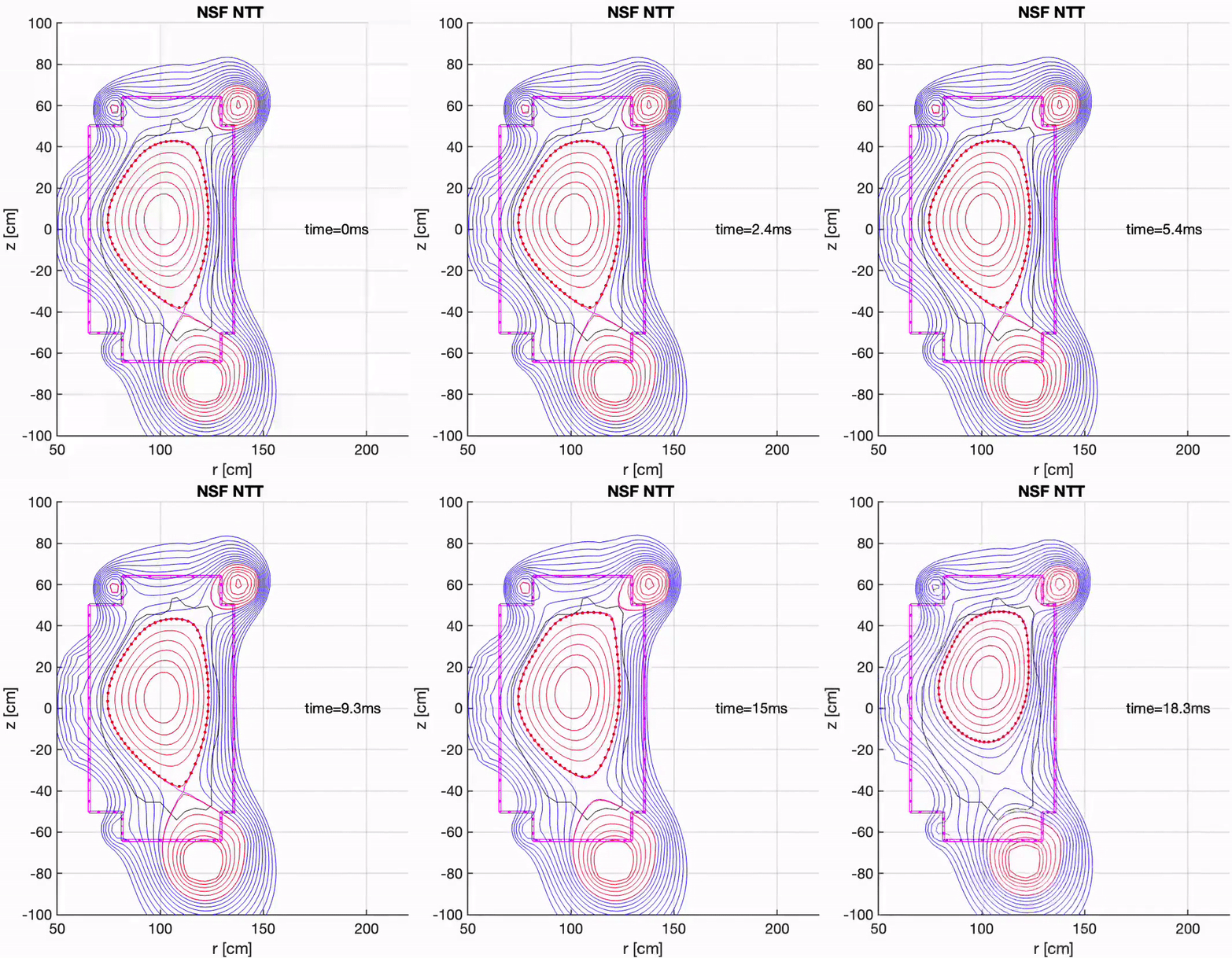
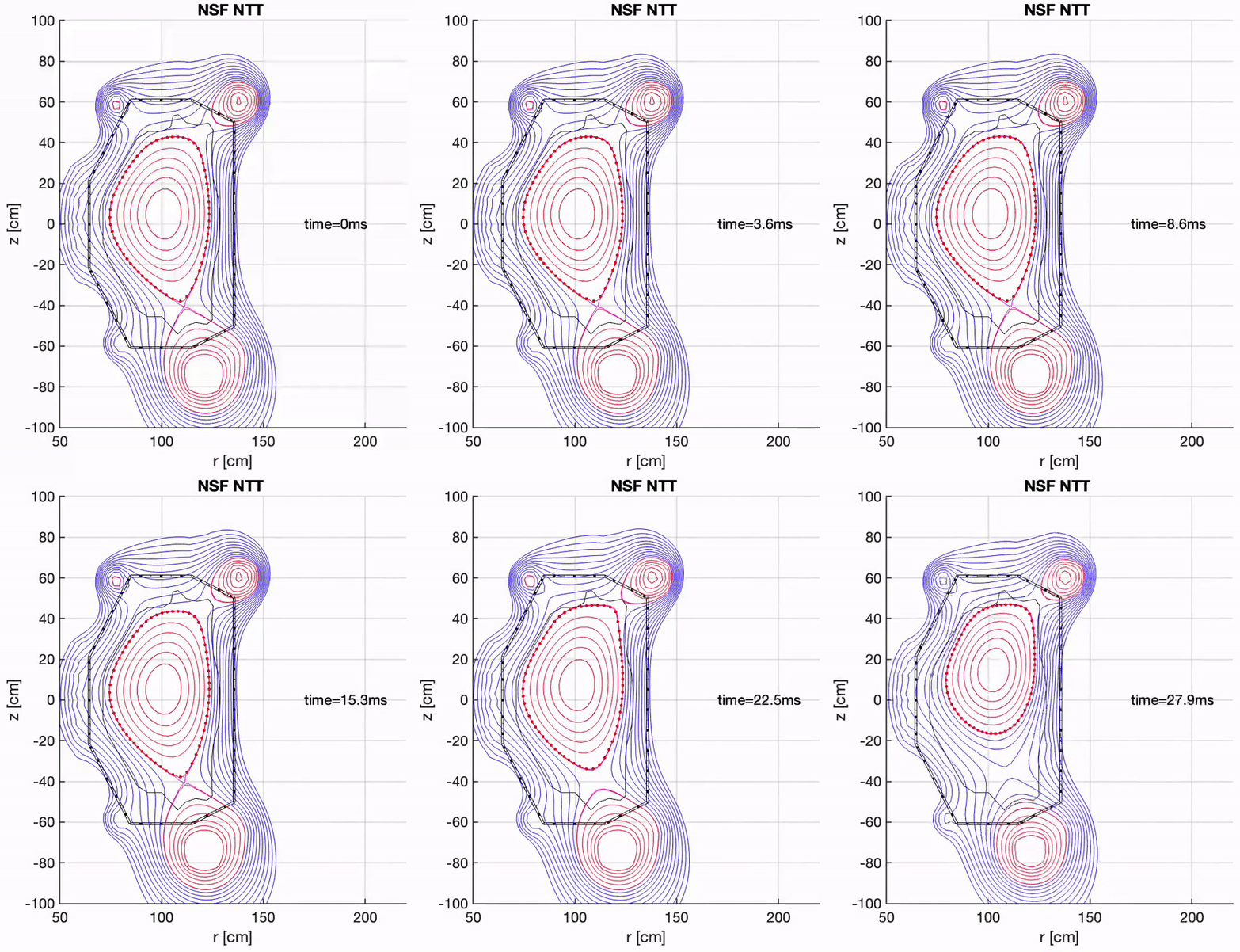
a) rectangular vessel, VDE time ≈ 18 ms; b) cone-shaped design, VDE time ≈ 27 ms
NSFsim was instrumental in identifying these issues early in the design process, enabling adjustments to both passive and active stabilization strategies before advancing to detailed engineering design. These adjustments highlighted a crucial lesson: early-stage designs need comprehensive testing through simulations that encompass all major physical phenomena, such as magnetohydrodynamic (MHD) stability and electromagnetic interactions.
Lessons Learned and Broader Implications
This project underscores the importance of integrating physics-based simulations into every stage of tokamak design. While initial designs focused on magnetic equilibrium and maximizing space utilization, subsequent analyses revealed gaps in addressing vertical stability — a key aspect of operational safety and performance.
Key takeaways include:
- Comprehensive modeling: Beyond equilibrium calculations, MHD stability analyses and electromagnetic load simulations are essential for ensuring robust designs.
- Iterative optimization: Design processes should remain flexible to incorporate findings from advanced simulations and experimental data.
- Interdisciplinary collaboration: Effective communication between physicists and engineers is crucial to balancing competing priorities such as stability, manufacturability, and cost.
The experience gained from this project contributes valuable insights to ongoing efforts in designing next-generation fusion devices, including those with unconventional plasma shapes like negative triangularity.
Conclusion
The development of a vacuum vessel for a negative triangularity tokamak illustrates both the challenges and opportunities inherent in fusion engineering. By combining innovative design approaches with rigorous simulation-based validation, it is possible to address complex issues such as vertical plasma stability while maintaining practical considerations like manufacturability. NSFSim has proven to be an invaluable tool in this process, enabling not only scenario modeling but also disruption modeling — key factors for ensuring safe and reliable operation. These lessons will inform future advancements in tokamak technology, bringing us closer to achieving sustainable fusion energy.
We invite you to be part of this groundbreaking journey. Follow our blog, subscribe to our LinkedIn for regular updates, or reach out to us directly to discuss potential collaborations.
References
[1] Next Step Fusion Negative Triangularity Tokamak Conceptual Design, https://blog.nextfusion.org/next-step-fusion-negative-triangularity-tokamak-conceptual-design-5a6d64d39e9a
[2] NSFSim link, https://blog.nextfusion.org/nsfsim-c5642b87aa47
[3] Validation of NSFSim as a Grad-Shafranov Equilibrium Solver at DIII-D, https://papers.ssrn.com/sol3/papers.cfm?abstract_id=4973004